What is River Rafting in Rishikesh?
River rafting in Rishikesh takes you onto the Ganges on a raft with a trained guide, along a stretch of river that changes as you move. Calm pools give you time to settle into the rhythm of the water before the river gathers pace again, sending the raft through a series of rapids. No prior experience is required, making it accessible to first-time rafters as well as to those returning for the river's more challenging stretches. Three things shape the experience:
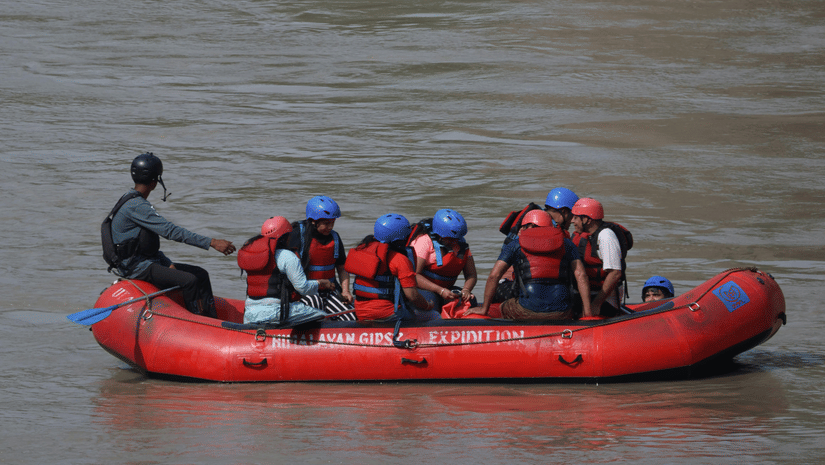
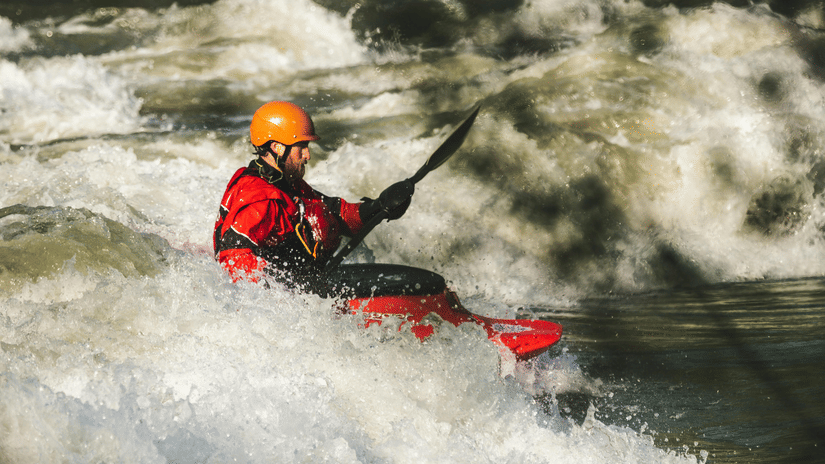
The Flow of the River: The Ganges moves with real force through this stretch, and its natural gradient creates rapids ranging from gentle riffles to demanding whitewater.
The Surrounding Landscape: Forested hills, rock cliffs, and open Himalayan sky frame nearly every bend, turning the ride into a landscape experience as much as a water sport.
A Choice of Stretches: Routes range from short, beginner-friendly runs to longer expeditions built for rafters chasing bigger rapids and longer days on the water.
What Makes White-water Rafting in Rishikesh Distinct
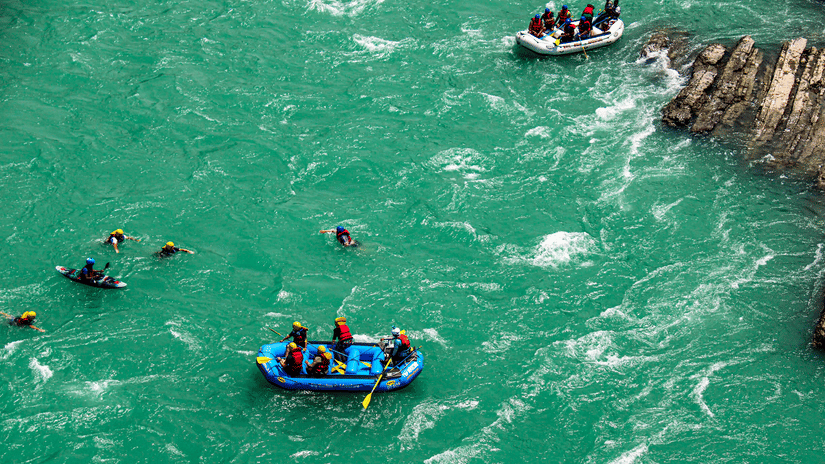
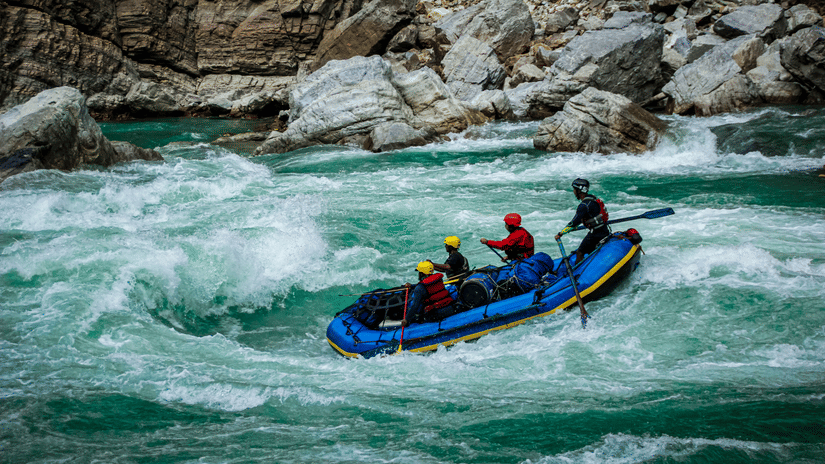
White water is where the Ganges shows its restless side. As the river drops through the Himalayan foothills, its current accelerates around rocks and over riverbed drops, churning the surface into frothy, aerated waves. Then, almost as quickly, the water settles into calmer pools before gathering pace again at the next rapid. This constant shift between turbulence and calm, framed by the hills and riverbanks, gives white-water rafting in Rishikesh its distinctive rhythm.
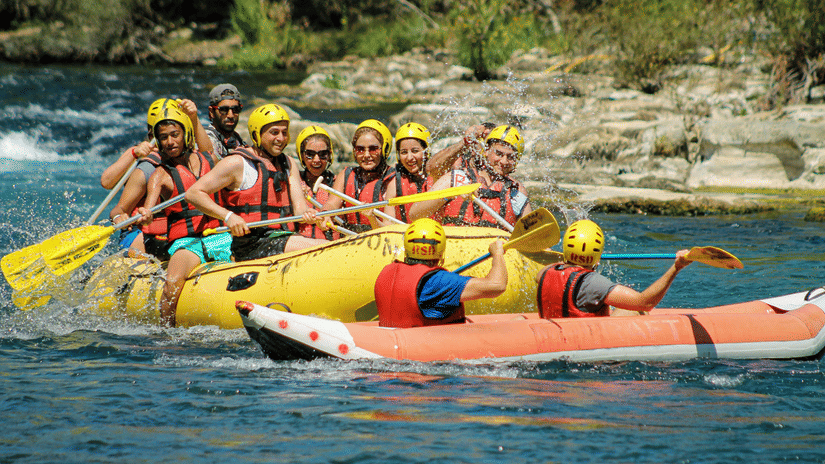
Understanding Rapid Grades on the Ganges
The rapids on the Ganges are graded from Grade I to Grade V, based on their speed, turbulence, and technical difficulty. Around Rishikesh, most rafting routes feature Grade II to Grade IV rapids, so the river offers plenty of variation as you move through different stretches. Your guide reads the water ahead, directs the raft, and helps the group respond to each rapid. This range of grades is what makes river rafting in Rishikesh suitable for beginners while still offering more demanding sections for experienced rafters.
Roller Coaster (Grade III+): A long, high-wave rapid found on both the Shivpuri and Marine Drive stretches of the river
Golf Course (Grade III+): A technical run that rewards precise paddling with a genuine rush of adrenaline
Club House (Grade III): A local favourite, known for strong hydraulics and big, dependable splashes on every run
Double Trouble (Grade II): A signature rapid on the Shivpuri stretch, moderate enough for rafters newer to the sport
Three Blind Mice (Grade III+): Three closely spaced rapids on the Marine Drive stretch that barely leave time to breathe
The Wall (Grade IV): The most demanding named rapid on the Kaudiyala stretch, known for occasionally flipping rafts
Every one of those named rapids looks different depending on when in the year you show up to raft them. The season for river rafting in Rishikesh generally runs from September through June, with two windows when conditions are most reliable.
September to November: The post-monsoon river runs full but settled, the air stays clear and cool, and the hillsides turn their greenest.
February to May: Temperatures turn pleasant, and the river flow steadies out, though April and May get busy enough to book ahead.
The Closed Window: Rafting is suspended from 1 July through mid-September, when monsoon rain pushes the Ganges past safe rafting levels.
Short and Family-friendly Stretches
Two stretches on the Ganges are built for rafters who want moving water without a full day of hard paddling.
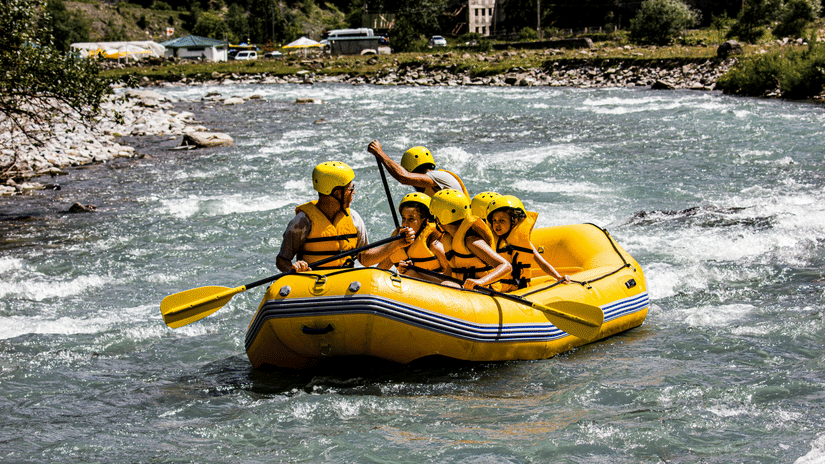
Brahmpuri to Rishikesh (~9 km, Grade I - III): The shortest commercial stretch, suited to the 14-to-60 age range and a first trip with children
Shivpuri to Rishikesh (~16 km, Grade II - III): A popular, moderately priced all-rounder that blends calm water with enough rapids to stay interesting
Longer and More Demanding Stretches
Three stretches push further downriver, adding distance, harder rapids, or both for rafters chasing a bigger day out.
Marine Drive to Rishikesh (~26 km, Grade II - III+): A roughly two-hour run popular with corporate groups, taking in several named rapids along the way.
Kaudiyala to Rishikesh (~36 km, Grade III - V): The longest single-day route on the river, built for rafters chasing serious white water.
Devprayag Expedition (Multi-day): A two-day trip for rafters in good physical condition, running further upstream than any single-day route.
Marine Drive to Shivpuri (12 km, 2 to 3 hours): Approximately INR 1,000 per person
Shivpuri to Nim Beach (15 km, 2 to 3 hours): Approximately INR 1,000 per person
Marine Drive to Nim Beach (~25 km, 3 to 4 hours): Approximately INR 1,500 per person
Kaudiyala to Shivpuri (25 km, 3 to 4 hours): Approximately INR 2,000 per person
Kaudiyala to Nim Beach (~35 km, 4 to 5 hours): Approximately INR 2,500 per person, with an optional picnic lunch for an additional INR 500
A government rafting slip costs INR 20 per person and is paid in cash at the starting point.
What to Pack for the Ride
Keep your rafting kit simple and stick to the essentials:
Quick-dry T-shirts, shorts, and a change of clothes
Sports shoes or secure river sandals
Sunscreen, sunglasses with a strap, and a hat
Waterproof pouch for your phone, cash, and valuables
Light snacks and water for longer routes
Helmets, life jackets, and paddles are provided by certified rafting operators.
Follow Your Guide: Every instruction from your guide matters most in the middle of a rapid.
Skip Alcohol and Drugs: No rafting operator will let you on the water if you are not sober.
Leave Loose Items Behind: Jewellery and anything not secured are easy to lose in fast-moving water.
Book Certified Operators Only: Choose operators who provide safety gear, trained guides, and proper insurance coverage.
Raft in Daylight Only: Every commercial rafting trip on the Ganges runs between sunrise and sunset.
Check Medical Fitness First: Pregnant guests and anyone with a cardiac or asthmatic condition should not raft.
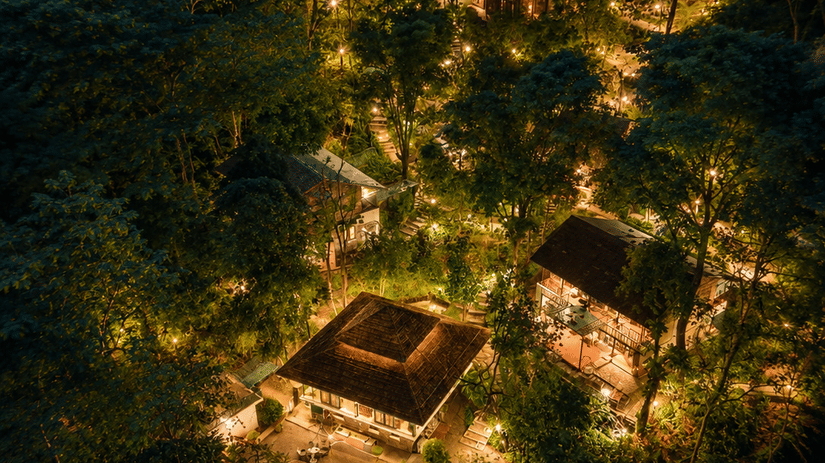
Wake up to birdsong, fresh mountain air, and the Ganges moving below the forest at Neemrana's Glasshouse on The Ganges. Set across the natural slope of Shivpuri, our retreat offers 14 unique rooms, each named after an exotic Himalayan bird. Choose from Hideaway, Family, Machan, and Grand Rooms, with the four Machan rooms perched among the trees, looking across the valley and river.
Take a seat at our restaurant or alfresco terrace serving Trans-Himalayan specialities, rustic Garhwali curries, and seasonal dishes inspired by Tehri Garhwal, Nepal, and Himachal Pradesh. The setting keeps the Ganges and forest close, whether breakfast begins your day or dinner brings it to a slower close.
The morning is yours to explore the retreat at an unhurried pace. Follow forest trails, go birdwatching, practise early morning yoga beside the Ganges, or make your way down to an exciting short trail to a hidden riverside beach. Around noon, our team can arrange your transfer to the rafting base camp, leaving the morning open for the forest and river as your experience.
After the rapids, ease your tired muscles with an Ayurvedic therapy or massage or gather around an intimate bonfire as the sun sets behind the mountains.